When Should You Stop Eating?
Written by Aimee Gindin
Certified Intuitive Eating Counselor
Have you ever finished a meal and realized you were way too full? Or maybe you stopped eating just because your plate was empty, even though you were still a little hungry? Knowing when to stop eating can be tricky. We are often taught to finish everything on our plates, or we eat quickly without paying attention.

Intuitive Eating teaches us a different way. It helps us listen to our bodies instead of following strict rules. This approach is very different from dieting methods that rely on outside numbers. If you are curious about the differences, you might want to read about intuitive eating vs calorie counting.
Table of Contents
- The Clean Plate Club Problem
- Trust is the Key
- How to Know When You Are Done
- Signs of Comfortable Fullness
- Why This Matters
- FAQ
- Sources
The Clean Plate Club Problem
Many of us grew up hearing, "Clean your plate!" Parents often mean well. They do not want to waste food. However, this rule can teach us to ignore our bodies. We learn to stop eating only when the food is gone, not when our stomachs are full.
This habit can stick with us as adults. We might eat everything just because it is there. This is sometimes called "autopilot eating." You might be watching TV or looking at your phone, and suddenly, your food is gone. You did not even taste the last few bites!
Another reason we overeat is the "diet mentality." When people diet, they often feel like they have a license to eat everything allowed at mealtime. They think, "I better eat all of this now because I won't get to eat later." This leads to stuffing ourselves instead of listening to our hunger cues.1
Trust is the Key

To stop eating when you are comfortably full, you need to trust yourself. You must believe that you can eat again when you get hungry. This is called giving yourself "unconditional permission to eat."2
Think about it this way. If you truly know that food will be there later, you do not feel the need to stuff yourself now. You can stop when you are satisfied because the food isn't going anywhere. It is easier to leave food on your plate when you know it isn't your "last chance" to eat.
How to Know When You Are Done
So, how do you actually know when to put the fork down? It requires a little bit of practice. We call this "Conscious – Awareness Eating." It means paying attention to your food and your body while you eat.3
Here are three simple steps to help you find your stopping point:
- The Pause: In the middle of your meal, take a little break. Put your fork down. This is not a promise to stop eating. It is just a "time – out" to check in with yourself.
- The Taste Check: Ask yourself, "Does this food still taste good?" Often, the first few bites are the best. As we get full, the food might not taste as amazing as it did at the start. If it doesn't taste great anymore, why keep eating it?4
- The Satiety Check: Ask yourself, "How full am I right now?" Are you still hungry? Are you starting to feel satisfied? This is a great time to use the intuitive eating hunger scale to put a number on your feeling.
The Last Bite Threshold
As you get better at checking in, you will discover something called the "last bite threshold." This is the moment when you realize you are just a few bites away from being done.5 You might think, "I am almost there." This helps you stop before you get to that uncomfortable, stuffed feeling.
Signs of Comfortable Fullness
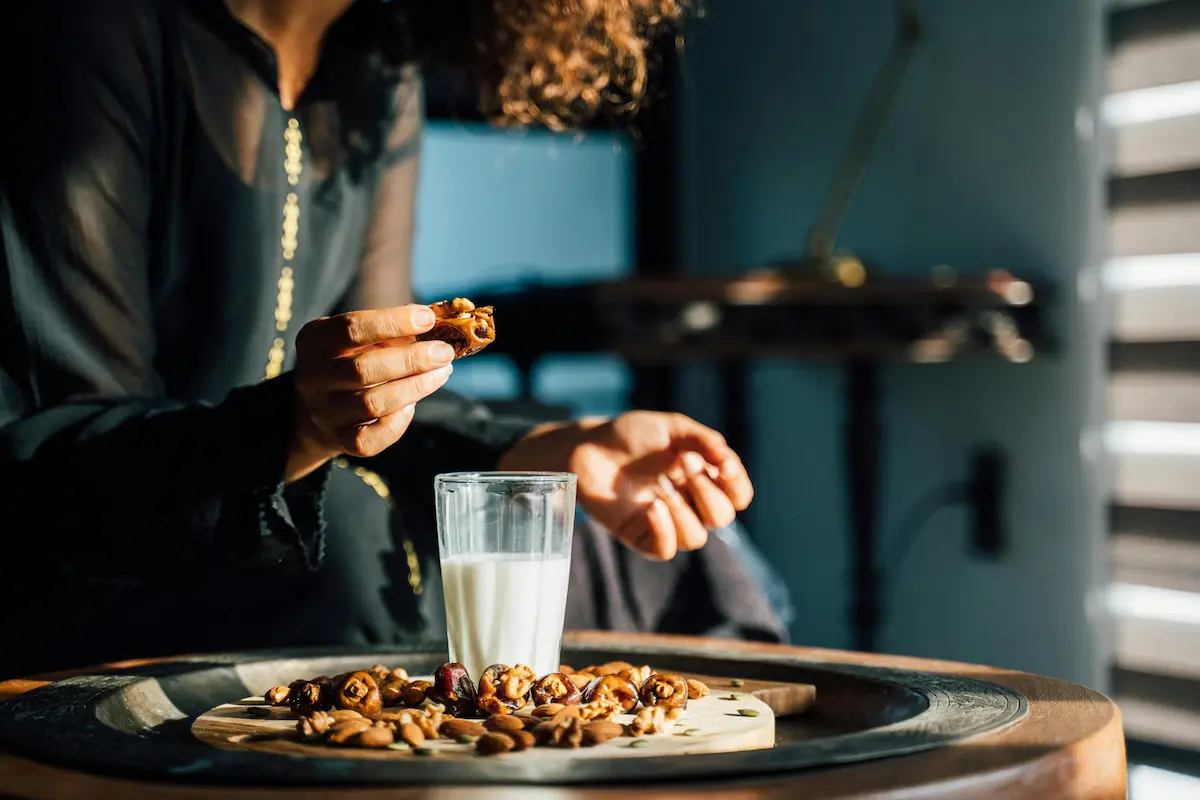
It can be hard to describe what "comfortable fullness" feels like if you are used to being stuffed or starving. It is not about feeling like a balloon about to pop. It is a subtle feeling.
Comfortable fullness might feel like:
- A feeling of stomach contentedness.6
- Feeling satisfied and pleasant.7
- A sense that you have had enough energy to keep going.
If you are having trouble feeling these signs, it helps to remove distractions. Try eating without the TV on. This is similar to the practices found in intuitive eating vs mindful eating, where focus is key.
Also, remember that it is okay if you don't get it perfect every time. Sometimes you will eat too much, and that is fine. It is all part of the learning process. If you need tools to help you practice, check out our free intuitive eating resources.
Why This Matters
Learning to feel your fullness is Principle 6 of Intuitive Eating. It changes eating from a stressful task into a pleasant experience. You stop judging yourself for what you eat or how much you eat. Instead, you honor what your body needs.
When you respect your fullness, you show respect for yourself. You are telling your body, "I hear you, and I care about how you feel." This builds a strong, healthy relationship with food.
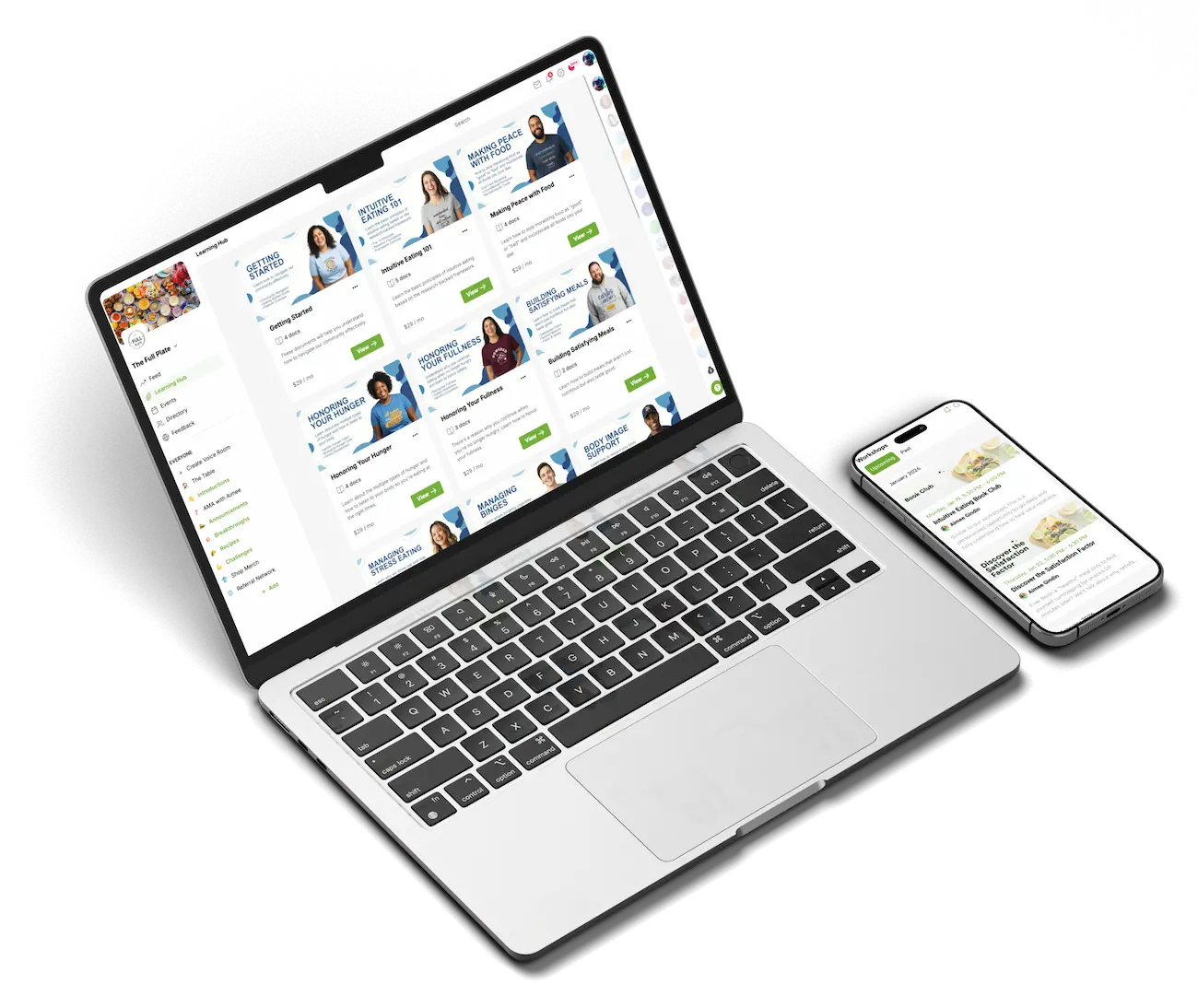
If you are ready to leave the Clean Plate Club behind and start trusting your body, we would love to help you on your journey. You can register to become a member at The Full Plate Community.
Join our
Intuitive Eating Community
Heal your relationship with food without shame, without rules, and without restrictions.
FAQ
It is very common to feel this way. Many of us were taught that leaving food is wasteful. However, using your body as a trash can for extra food does not help anyone. It is better to listen to your body. You can always save leftovers for later!
This is where the “Taste Check” comes in handy. If the food still tastes amazing, you might still be hungry. If the flavor is boring you, but your stomach is still growling, you might need a different kind of food. If the food is boring and your stomach feels content, you are likely full.
Yes, absolutely! A hunger scale is a great tool. It helps you rank your hunger from 1 to 10. Aim to stop when you are at a comfortable level, usually around a 6 or 7. You don’t want to be stuffed (a 10) or starving (a 1).
That is totally okay! Intuitive Eating means you can eat whenever you are hungry. If you stop eating and realize later that you didn’t eat enough, just have a snack. Your body will learn to trust that you will feed it when it needs fuel.
Yes, it is completely normal. Sometimes food just tastes too good to stop, or we are at a special celebration. One meal of overeating won’t ruin your health. Be kind to yourself and remember that normal eating includes times when we eat a little more than usual.
Eating slowly can definitely help. It takes time for your stomach to tell your brain that it is full. If you eat very fast, you might bypass your fullness signals and end up feeling stuffed. Taking pauses helps you catch that “last bite threshold” before it is too late.
When you watch TV or scroll on your phone while eating, your brain is focused on the screen, not your stomach. This makes it hard to notice the subtle signs that you are getting full. We call this “autopilot eating.” Trying to eat without distractions can help you reconnect with your satiety cues.
The last bite threshold is that moment when you realize you are just a few bites away from being satisfied. It is a subtle feeling that says, “I am almost done.” Identifying this moment helps you put the fork down before you cross the line into feeling uncomfortably full.
Sources
1: Evelyn Tribole and Elyse Resch, *Intuitive Eating: A Revolutionary Anti-Diet Approach*, 4th ed. (New York: St. Martin’s Essentials, 2020), 219.
2: Tribole and Resch, Intuitive Eating, 221.
3: Tribole and Resch, Intuitive Eating, 222.
4: Tribole and Resch, Intuitive Eating, 223.
5: Tribole and Resch, Intuitive Eating, 224.
6: Tribole and Resch, Intuitive Eating, 222.
6: Tribole and Resch, Intuitive Eating, 222.