Intuitive Eating vs Calorie Counting
Have you ever looked at a plate of food and seen numbers instead of a delicious meal? If you have tried to count calories, you know how tiring it can be. You might worry if you ate too much or if you have enough points left for dinner. This is what we call “diet culture.” It tells us we cannot trust our bodies. But there is a different way to live, and it is called Intuitive Eating.
At The Full Plate, we believe eating should not be a math test. It should be enjoyable. Let’s look at the battle of Intuitive Eating vs. calorie counting and see which one really helps you feel good.
Table of Contents
- The Trouble with Counting Numbers
- What is Intuitive Eating?
- The Big Difference: Inside vs. Outside Rules
- Why Diets Don’t Work Forever
- Trusting Your Own Body
- FAQ
- Sources
The Trouble with Counting Numbers
Calorie counting relies on “external” rules. This means you look outside of yourself to decide what to eat. You might use an app, a book, or a strict plan. The problem is that these rules do not know how hungry you are today. They do not know if you had a busy day at school or soccer practice.
When you ignore your hunger because you are out of calories, your body thinks it is starving. This can actually slow down your body’s energy burning engine (metabolism). It can also make you crave food even more. The book Intuitive Eating explains that this restriction often leads to overeating later. It is like holding your breath. You can only do it for a short time before you have to gasp for air.1
“The problem is that any focus on weight loss will sabotage your ability to reconnect with your body’s Intuitive Eating signals.”2
What is Intuitive Eating?
Intuitive Eating is the opposite of a diet. It is about trusting your own body to tell you what it needs. You were born knowing how to do this. Think about babies. They cry when they are hungry and stop eating when they are full. They do not worry about calories.
As we get older, we sometimes forget how to listen to these signals. Intuitive Eating helps us learn them again. It teaches us to honor our hunger and respect our fullness. If you are not sure what those signals feel like, checking out the intuitive eating hunger scale can be a great start. It helps you understand if you are starving, stuffed, or just right.
The Big Difference: Inside vs. Outside Rules
Here is a simple way to see how these two styles match up.
| Calorie Counting (Dieting) | Intuitive Eating |
|---|---|
| Relies on apps, scales, and lists. | Relies on your body and brain signals. |
| Tells you what not to eat (bad foods). | Says all foods are allowed (no good vs. bad). |
| Often makes you feel guilty. | Helps you make peace with food. |
| Ignores hunger if you are “out of points.” | Honors hunger whenever it happens. |
| Focuses on weight and looks. | Focuses on health and how you feel. |
When you stop counting, you gain freedom. You can go to a birthday party and eat cake without feeling bad. You can eat a salad because it tastes fresh, not because you have to.
Why Diets Don’t Work Forever
Many people think dieting shows willpower. But when a diet fails, it is not your fault. Diets are set up to fail. When you restrict food, your brain sends out chemicals that make you think about food all the time. This is your body trying to survive.3
If you have felt stuck in this cycle, you are not alone. Working with a certified intuitive eating counselor can help you break free. They are experts trained to help you stop fighting with food.
Trusting Your Own Body
The most amazing tool you have is your own body. It sends you messages all day long. It tells you when to sleep, when to use the bathroom, and when to eat. Intuitive Eating asks you to listen to those messages again.

It takes practice. You might need some inspiration along the way. Reading some mindful eating quotes can remind you why this journey is worth it.
If you are ready to stop counting and start living, we have tools to help. You can find free intuitive eating resources like checklists and guides on our website.
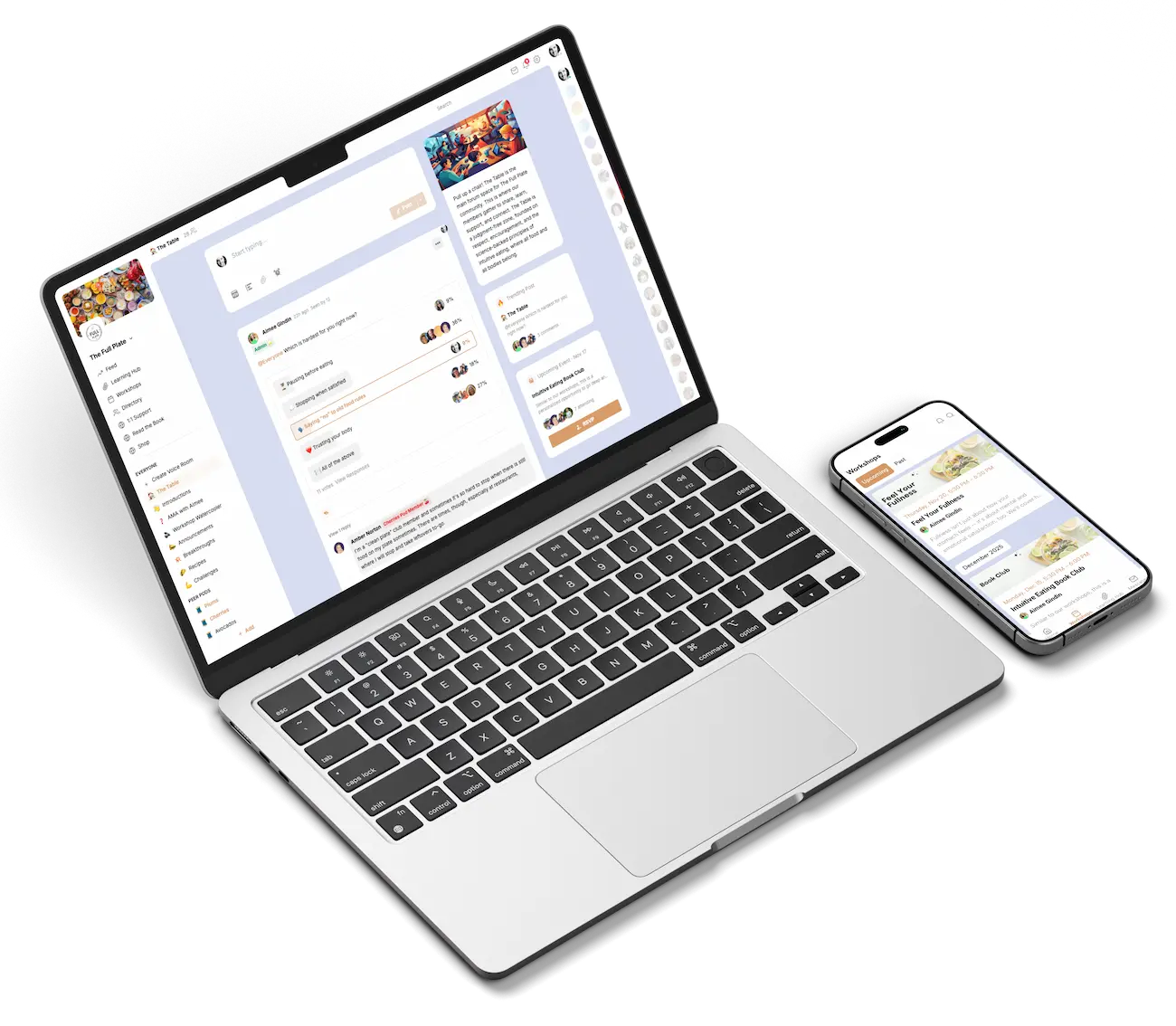
Eating should be peaceful and joyful, not stressful. If you want to learn more and meet people who are on the same path, you should register to join our community. Let’s fill your plate with joy, not numbers!
Join our
Intuitive Eating Community
Heal your relationship with food without shame, without rules, and without restrictions.
Free membership
No credit card required
FAQ
Intuitive Eating relies on your body’s internal signals like hunger and fullness to guide eating. Calorie counting relies on external rules, math, and strict limits that ignore what your body actually needs in the moment.
No. While you might eat more “play foods” at first because you have been restricting them, your body will eventually crave a balance of nutritious foods and fun foods. This is called “habituation”—when a food is always allowed, it becomes less exciting to overeat it.
No, Intuitive Eating is about healing your relationship with food, not shrinking your body. Focusing on weight loss can actually stop you from being able to listen to your body’s signals effectively.
It can be scary to stop relying on numbers, but it is possible. It takes patience and practice to relearn how to trust your body. Using tools like a hunger scale can help replace the numbers with feelings.
You do not need a doctor to start, but many people find it helpful to work with a Certified Intuitive Eating Counselor. They are professionals trained to help you break free from diet rules safely.
Not at all! One of the principles is “Gentle Nutrition.” This means you make food choices that honor your health and taste good, but you do this after you have healed your relationship with food and stopped dieting.
You can join communities like “The Full Plate” to find support. There are also newsletters, workshops, and free resources available to help guide you through the process of rejecting the diet mentality.
Sources
1: Evelyn Tribole and Elyse Resch, Intuitive Eating: A Revolutionary Anti-Diet Approach, 4th ed. (New York: St. Martin’s Essentials, 2020), 41.
2: Tribole and Resch, Intuitive Eating, 17.
3: Tribole and Resch, Intuitive Eating, 41-42.