Intuitive Eating and Diabetes
If you live with diabetes, you probably have a list of food rules a mile long. Eat this, don’t eat that, count these carbs, watch the clock. It can feel like a full-time job that you never applied for! It is exhausting to constantly worry about every bite you take. But what if there was a different way? What if you could manage your blood sugar without the stress of strict dieting?

Enter Intuitive Eating. This approach might sound too good to be true, especially if you have been told that strict control is the only way to stay healthy. But let’s dig into what the science actually says and how listening to your body can be a game-changer for your health.
Table of Contents
- What is Intuitive Eating?
- The Science: Diabetes and Listening to Your Body
- Honoring Your Hunger to Prevent Lows
- Gentle Nutrition: The Sweet Spot
- Benefits of Intuitive Eating for Diabetes
- Moving Away from the Diet Mentality
- FAQ
- Sources
What is Intuitive Eating?
Intuitive Eating is not a diet. In fact, it is the exact opposite. It is a self-care eating framework that helps you make peace with food. Instead of following outside rules, you learn to listen to the signals your own body sends you.
Intuitive Eating is a compassionate, self-care eating framework that treats all bodies with dignity and respect.1
For someone with diabetes, this means tuning in to how food makes you feel physically, not just what a number on a package says. It is about trusting your body again. If you are curious about the basics, you can join our intuitive eating community for free and see how we approach food freedom.
The Science: Diabetes and Listening to Your Body

You might worry that “listening to your body” means eating cookies for dinner and letting your blood sugar spike. That is a common fear! However, research paints a different picture.
Studies suggest that Intuitive Eating can actually help with blood sugar control. In fact, one study found that for young people with type 1 diabetes, those who scored higher on Intuitive Eating scales actually had better A1c levels (that is your average blood sugar over time).2
Why does this happen? When you stop fighting with food, you lower your stress. Stress releases hormones that can actually raise blood sugar levels. Plus, people who eat intuitively are less likely to binge eat or have chaotic eating patterns, which keeps blood sugar more stable.
Honoring Your Hunger to Prevent Lows
One of the most important principles of Intuitive Eating is “Honor Your Hunger.” For a person with diabetes, this is not just a nice idea – it is a safety rule! Ignoring hunger can lead to dangerous drops in blood sugar (hypoglycemia).
Using tools like the intuitive eating hunger scale can help you catch hunger cues early. This allows you to eat before you get “hangry” and potentially overeat later to compensate.
- Mild Hunger: A gentle reminder to eat soon.
- Moderate Hunger: The perfect time to have a meal.
- Extreme Hunger: A danger zone where you might eat too fast or too much.
Gentle Nutrition: The Sweet Spot
There is a principle called “Gentle Nutrition” that is perfect for managing medical conditions. It means you make food choices that honor your health and your taste buds. You do not have to eat perfectly to be healthy.
Make food choices that honor your health and taste buds while making you feel good. Remember that you don’t have to eat perfectly to be healthy.3
You might choose a complex carbohydrate like whole wheat bread because you know it helps keep your energy steady, not because white bread is “bad.” It is a choice you make from a place of self-care, not restriction. If you are used to rigid plans, you might want to read about the differences in intuitive eating vs calorie counting.

Benefits of Intuitive Eating for Diabetes
| Feature | Dieting Approach | Intuitive Eating Approach |
|---|---|---|
| Focus | Weight loss and restriction | Health and body signals |
| Relationship with Food | Fear and guilt | Peace and satisfaction |
| Blood Sugar | Often fluctuates with cycles of restriction/bingeing | Can stabilize with consistent, attuned eating |
| Mental Health | High stress | Reduced stress and anxiety |
Moving Away from the Diet Mentality
Diet culture tells us we need to shrink our bodies to be healthy. But focusing on weight loss often backfires. It can lead to “weight cycling” (losing and regaining weight), which is actually hard on your heart and can increase insulin resistance.4
If you are ready to stop the roller coaster, we have plenty of intuitive eating resources to help you get started. You don’t have to do this alone! You can work with a certified intuitive eating counselor who understands the unique needs of diabetes.
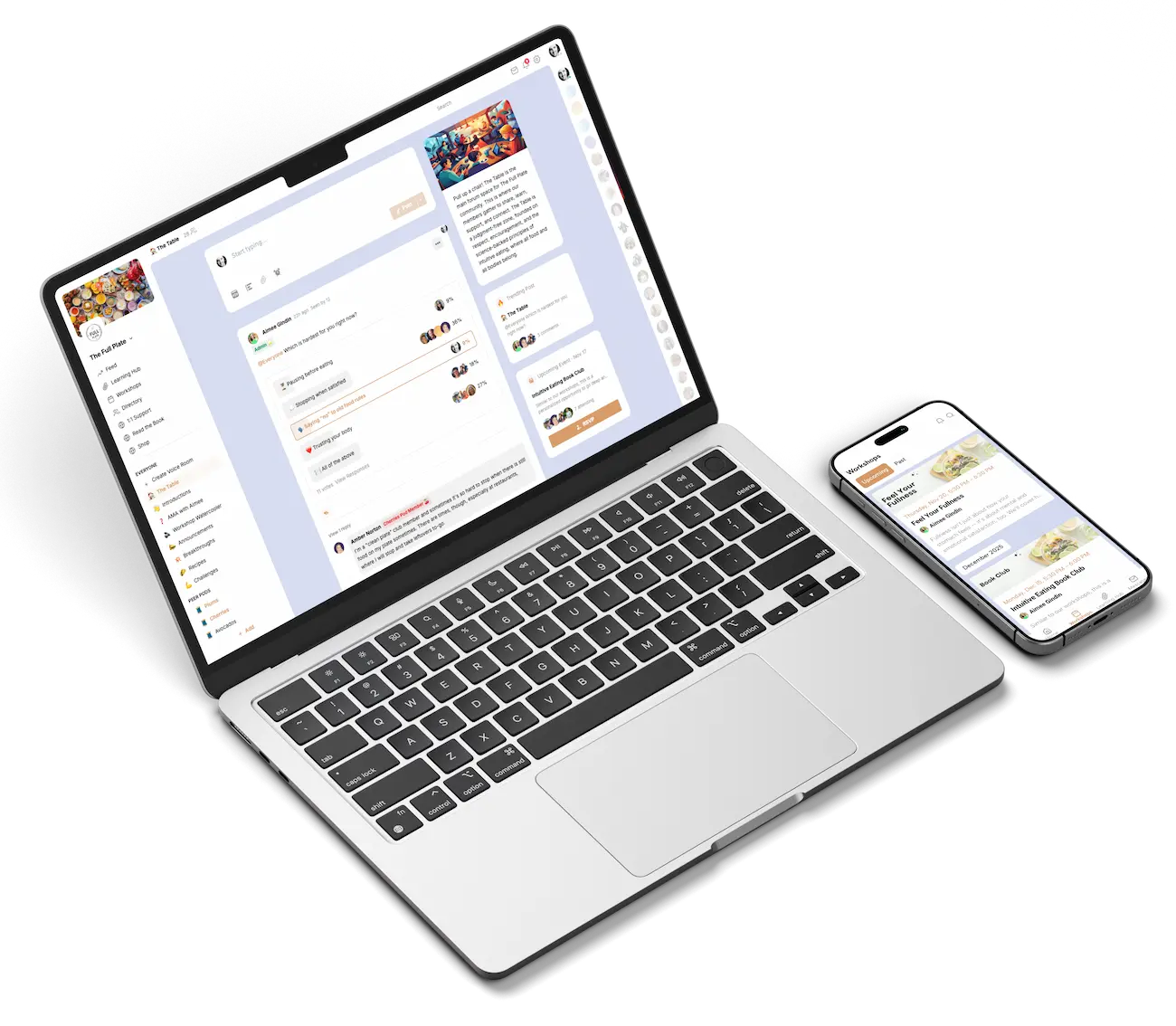
Ready to find freedom with food?
Join our
Intuitive Eating Community
Heal your relationship with food without shame, without rules, and without restrictions.
Free membership
No credit card required
FAQ
Yes, it can be very safe and effective. Studies indicate that Intuitive Eating programs may be a valuable tool for improving blood sugar control. By reducing the stress of dieting and preventing binge eating, you may find your blood sugar levels become more stable over time. Always consult your healthcare team as you make changes.
This is a very common fear! When you first stop restricting, you might crave high-sugar foods because they were “forbidden.” However, Intuitive Eating involves a process called habituation. Once you truly allow yourself to eat these foods, they lose their intense power over you. Most people naturally settle into a balance of eating nutritious foods that make them feel energetic and good.
No, definitely not. Checking your blood sugar is a form of gathering data, much like feeling your hunger cues. In Intuitive Eating, we view this data neutrally, without judgment. A high number isn’t a “bad” grade; it’s just information that helps you understand how your body responds to different foods and situations.
Intuitive Eating is a weight-neutral approach. The goal is to heal your relationship with food rather than to reach a specific number on the scale. Some people lose weight, some gain, and some stay the same. Focusing on weight loss can actually interfere with your ability to listen to your body’s internal signals.
You can use nutrition information like carb counts as a tool for “Gentle Nutrition.” If you take insulin, you likely need to know how many carbs you are eating to dose correctly. The difference is in the *attitude*. Instead of counting carbs to restrict yourself, you count them to care for your body and ensure you get the right amount of medication.
It can be tough when medical advice conflicts with your new path. You can advocate for yourself by asking your doctor to focus on health behaviors, like movement, stress reduction, and nutrition—rather than just weight. Explain that you are focusing on sustainable, long-term health habits rather than temporary diets.
Yes, and it can be incredibly beneficial. Research has shown an inverse relationship between A1c levels and Intuitive Eating scores in youth with type 1 diabetes. Helping kids trust their bodies can prevent the development of eating disorders, which are unfortunately more common in people with type 1 diabetes.
You don’t have to do it alone! You can find a community of like-minded people here at The Full Plate. We also recommend looking for a Certified Intuitive Eating Counselor who specializes in diabetes (medical nutrition therapy) to guide you through the specific medical nuances of your condition.
Sources
1: Evelyn Tribole and Elyse Resch, Intuitive Eating: A Revolutionary Anti-Diet Approach (New York: St. Martin’s Essentials, 2020), 17.
2: Tribole and Resch, Intuitive Eating, 29.
3: Tribole and Resch, Intuitive Eating, 77.
4: Tribole and Resch, Intuitive Eating, 27.